Why “one AI app” suddenly sounds realistic
You’ve probably noticed the shift from “Which AI tool should I use?” to “Why am I juggling five of them?” A year ago, the idea of one AI app that handles writing, search, meetings, files, and task follow-up sounded like marketing. Now it sounds like a cleanup project. The change isn’t magic; it’s that the underlying pieces—good enough models, cheaper inference, and more reliable integrations—have matured at the same time.
The practical driver is workflow, not novelty. When your AI can read your calendar, draft from your docs, summarize calls, and then create tasks in the same place, you stop paying the “context tax” over and over. This only works if permissions, connectors, and data boundaries are set up correctly, which takes real admin time and introduces new points of failure.
The daily friction: tool sprawl, prompts, and lost context
On a normal workday, the friction shows up in small, repeatable ways: you paste the same brief into a writing tool, then re-explain it in a meeting notes tool, then hunt for the “final” version in a doc folder. Each app has its own tone controls, prompt habits, and file access rules, so you end up maintaining a mental map of what each tool “knows” and what it doesn’t. When something goes wrong, it’s rarely dramatic—it’s a missing attachment, a slightly stale context window, or a summary that ignored the one message that mattered.
Tool sprawl also makes quality harder to judge. If outputs differ, was it the model, the prompt, the source data, or the connector that failed? Even when everything works, the overhead is real: extra logins, duplicated subscriptions, and the quiet time cost of re-orienting yourself every time you switch interfaces.
What makes a superapp different from a chatbot

Think about what you actually want when you open “AI.” Most of the time it’s not a conversation—it’s an outcome: a proposal drafted from last quarter’s deck, a client email that reflects the latest thread, action items pushed into your task system, or a spreadsheet updated with notes from a call. A chatbot can help, but it still expects you to supply context, move files around, and manually execute the follow-up steps.
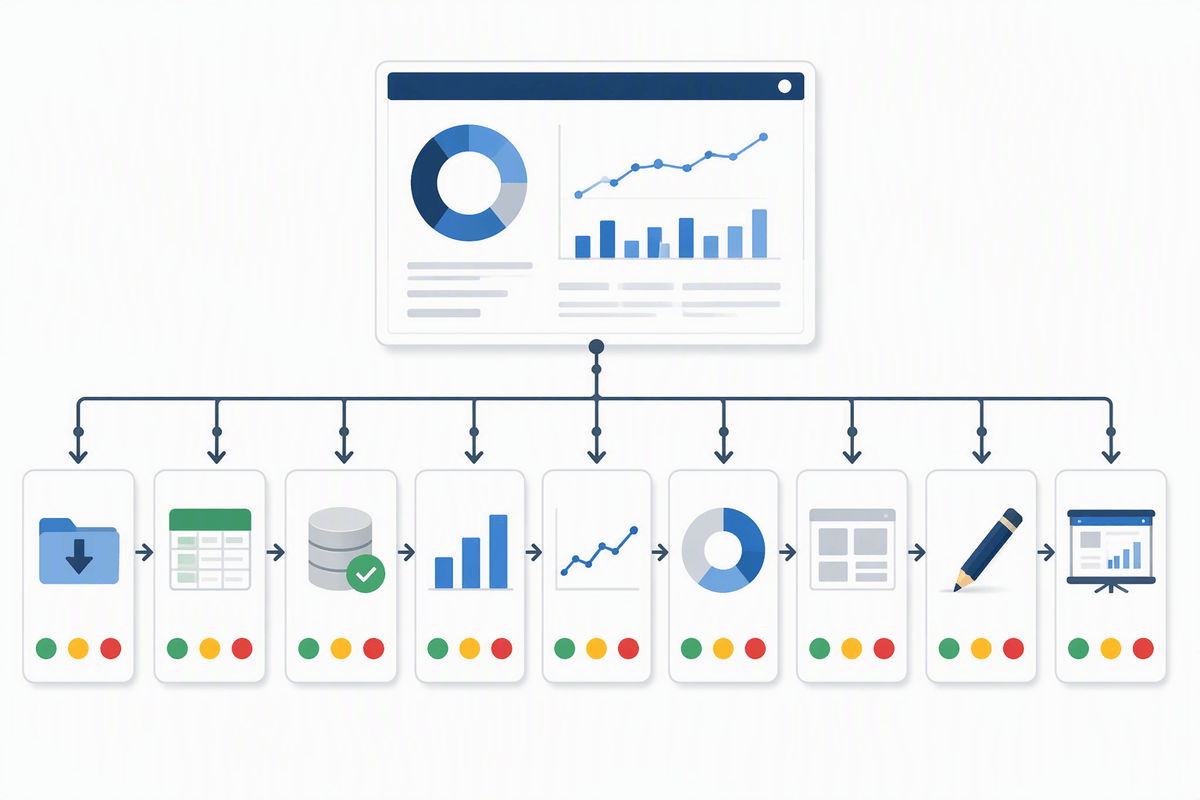
An AI superapp behaves more like a work hub with an AI layer: it can pull from connected sources (docs, email, CRM, calendar), apply consistent identity and permissions, and trigger actions across apps without you becoming the integration. The “super” part is orchestration—searching, drafting, summarizing, and then doing something with the result. This only feels seamless if the connectors are reliable and the governance is tight; otherwise you’ve just concentrated your workflow risk into one interface.
Consolidation benefits—and the hidden tradeoffs
You feel the upside of consolidation when “where did that come from?” stops being a daily question. One interface can standardize prompts, tone, and templates, so a sales recap, a follow-up email, and a task list come out consistent without you policing style across tools. Billing and onboarding get simpler too: fewer seats to manage, fewer settings to relearn, and fewer places for a key file to be “not connected.” For small teams, the biggest gain is speed—less copy/paste, fewer handoffs, and a shorter path from notes to actions.
The tradeoffs are easy to miss until you rely on the hub. Model quality can be “good enough” across many jobs but not best-in-class for your most valuable one. Lock-in becomes practical, not theoretical, because your workflows, connectors, and shared memories start living in one place. Costs can also creep back in through premium connectors, higher-tier governance features, or usage-based pricing once everyone adopts it. And when the superapp has an outage or a connector breaks, a much larger slice of your day stalls at once.
The plumbing: connectors, permissions, memory, and governance
Picture the first week after you connect your email, drive, calendar, and CRM: the demo looks smooth, but the real work is deciding what the AI is allowed to see and do. Connectors are the pipes, and they break in mundane ways—expired tokens, API limits, renamed folders, or a vendor changing an endpoint. When that happens, the AI doesn’t “fail,” it quietly gets partial context, which is harder to detect than a clear error.
Permissions are the second gate. A superapp needs to respect existing access controls (who can read which doc, which client notes are restricted), and it often adds its own layer for sharing, audit logs, and admin policy. Then there’s memory: useful when it remembers your products, customers, and preferred format, risky when it retains the wrong detail or mixes projects. Governance is how you keep it boring—data retention rules, approval steps for external sending, and a way to review what sources were used—at the cost of setup time and occasional friction.
Choosing your path: superapp, suite, or best-of-breed stack
The decision usually shows up as a familiar fork: do you want fewer surfaces to think about, or do you want the freedom to swap parts whenever something better appears? A superapp fits when your work is cross-cutting—documents, meetings, follow-ups, light automation—and the pain is mostly context switching. You’re buying consistency: one place to search, draft, and push actions out. The cost is concentration risk and dependency on the vendor’s connector roadmap.
A vendor “suite” (one ecosystem with multiple AI features across email/docs/chat/meetings) tends to win on identity, permissions, and admin controls, especially if your organization already lives there. It’s often less flexible, but it can be more predictable. A best-of-breed stack still makes sense when one task is disproportionately valuable—design, coding, research, analytics—and you need the top tool for that job, even if it means more glue work.
Use a simple checklist: where does your source truth live, what actions must be automated, what data can’t leave certain systems, and what breaks first if one tool goes down?
What to pilot in 30 days without betting the farm

Most teams don’t need a full switch to learn whether consolidation helps. Pick one repeatable workflow with clear inputs and outputs—weekly meeting notes to tasks, lead research to a short brief, or support tickets to a draft reply—and run it end-to-end in the superapp with connectors turned on for only the minimum sources. Define success upfront: time saved per run, fewer copy/pastes, and whether citations or source links are consistent enough to trust.
Keep the pilot fenced. Use a limited group, a non-sensitive project space, and a rule that anything sent externally needs a human review. Track where it breaks: expired permissions, missing folders, slow search, or “helpful” memory that drifts across clients. Budget time for setup and cleanup, because the hidden cost in month one is admin work, not model usage. If the workflow is measurably smoother, expand one connector or one team at a time.
The likely future: fewer interfaces, more layers underneath
Watch how people actually use these tools: they don’t want “more AI,” they want fewer places to go to get work done. The likely outcome is a small number of front doors—your suite, your superapp, maybe your browser—while the AI layer becomes a set of services underneath: models swap in and out, retrieval runs against multiple systems, and automations fire across apps. That doesn’t reduce complexity; it moves it into connectors, policy, and observability.
For small teams, the practical takeaway is to optimize for reversibility. Pick workflows you can export, keep source-of-truth systems clean, and treat “memory” as a feature you can turn down when stakes rise. You may end up with one interface, but you’ll still need clear permissions, backup paths when a connector degrades, and a budget for ongoing admin time.