What kids think AI is—and where they learned it
Ask a child what AI is and you’ll often hear a mash-up of things they’ve actually used: “the voice that answers,” “the app that makes pictures,” “the robot that writes.” Younger kids tend to describe AI as a helpful character living inside a device. Older kids more often call it “a program” or “an algorithm,” but still talk about it like a shortcut you can “ask” for answers.
Where they learn it is just as mixed. Some pick it up from school demos, but many absorb it from YouTube, TikTok, games, and friends swapping prompts. A lot of their confidence comes from seeing it work once, not from understanding how it can be wrong.
“It’s helpful, but it might be cheating”: first reactions
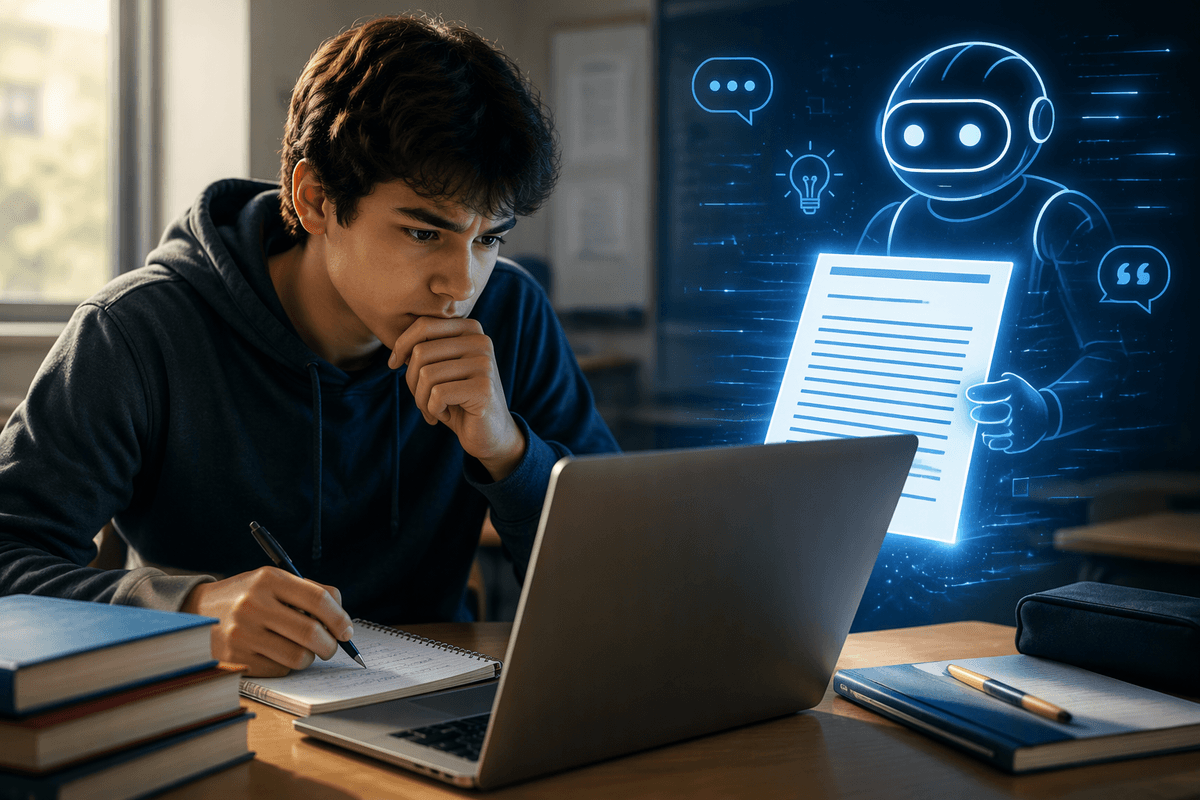
The first reaction many kids have is practical: it makes hard things easier. They try it on a worksheet, a story idea, a science definition, a text they don’t understand. Then the second reaction shows up almost immediately: “Are we allowed to do this?” Even kids who aren’t rule-followers can feel the fairness question in their stomach—if the tool does the thinking, what part is still theirs, and what happens if a teacher finds out?
That uncertainty produces a careful kind of experimenting. Some kids use AI “just to check” an answer, then quietly copy more than they planned. Others ask it to rephrase their own draft so it still feels like their voice. The conflict gets sharper when the tool is confidently wrong, or when it gives a perfect paragraph that feels too polished to hand in. It can shrink the time they spend struggling through a problem, which is often where learning actually sticks.
Age changes everything: how worries shift from 7 to 17
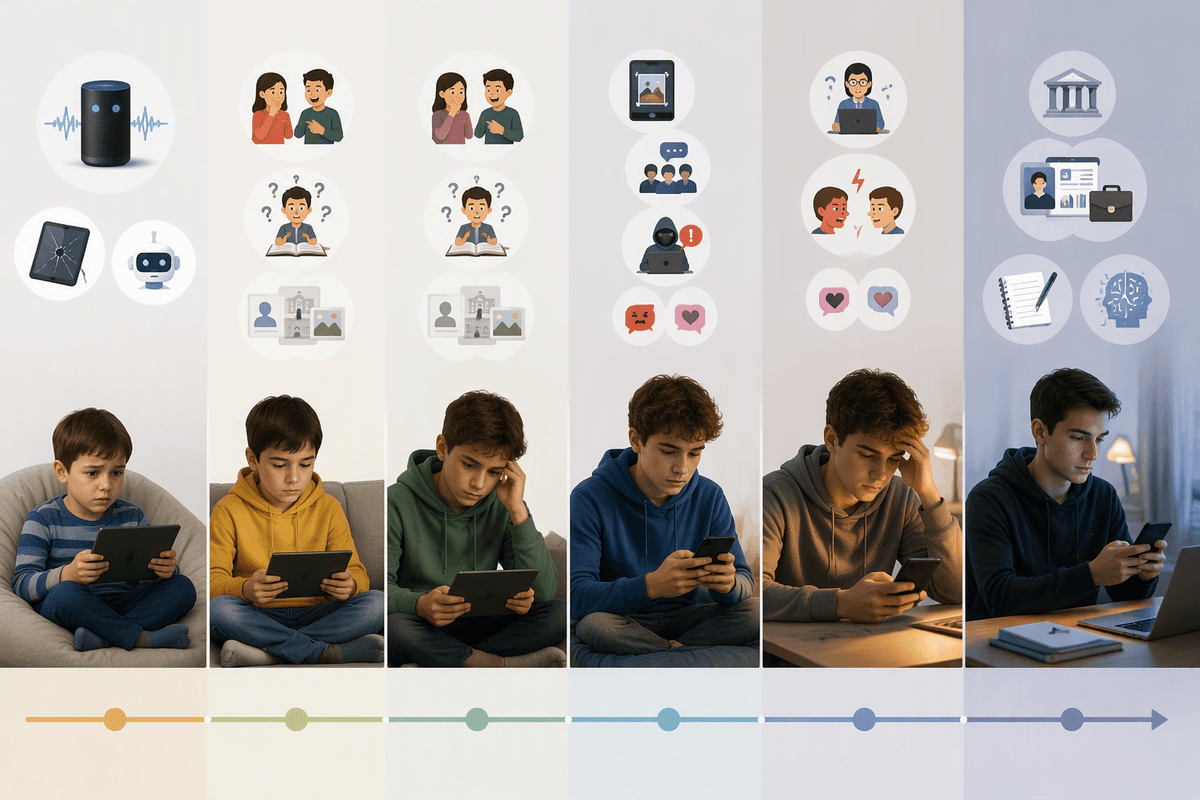
A seven-year-old’s worries are usually simple and close to home: is the assistant “listening,” will it say something scary, did I break the iPad? They’re more likely to trust a friendly voice and more likely to take answers literally, especially if the tool sounds sure. Around nine to twelve, kids start noticing patterns: it sometimes makes things up, it repeats the same jokes, it “knows” a lot but not about their exact homework. Their worry shifts toward getting in trouble, being embarrassed in front of classmates, or accidentally sharing a name, a school, a photo.
By early teens, the concerns get more social and strategic. They think about screenshots, group chats, and whether a teacher can tell. They also start testing boundaries—using AI to argue, flirt, or “win” an online fight—then realizing the words can travel without them. Older teens often focus on longer-range costs: losing their own writing voice, relying on shortcuts, and how an AI-shaped portfolio looks in college or job applications.
The biggest hopes kids attach to AI right now
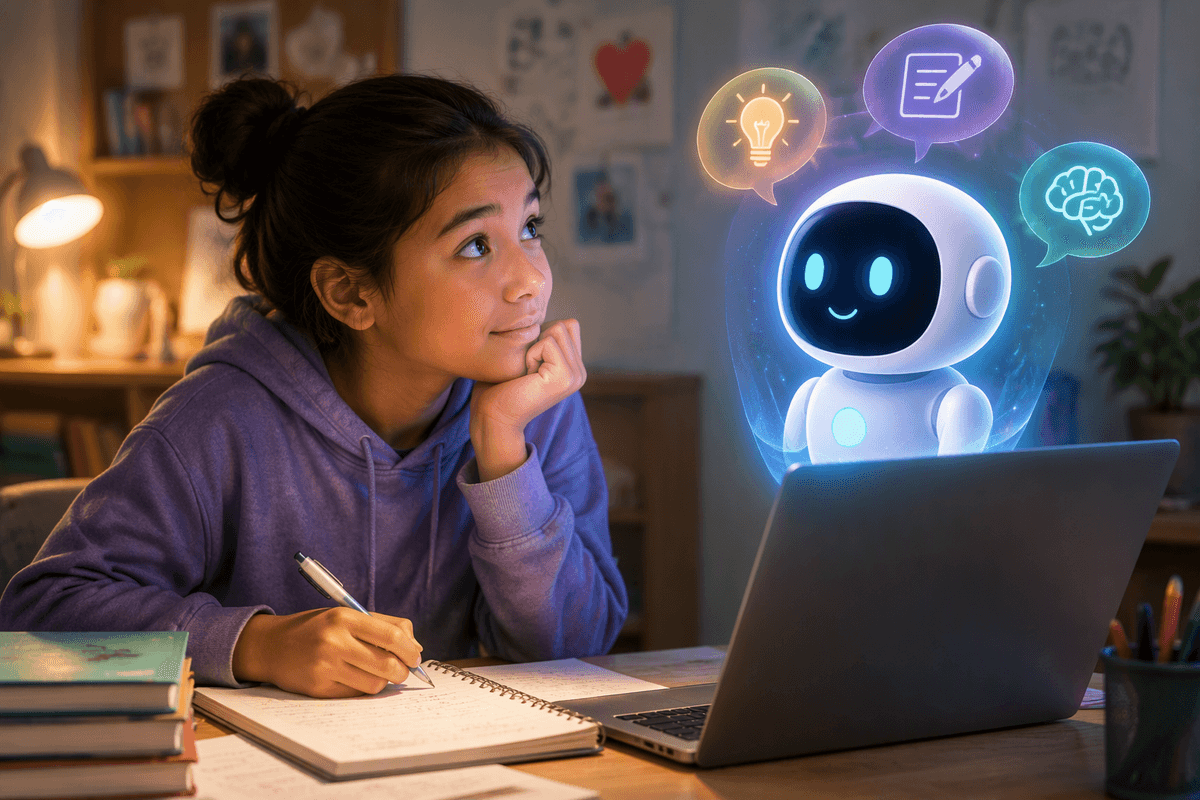
The familiar scene now is a child stuck on something small—how to start a paragraph, how to solve the first step, how to turn a messy idea into a plan—and reaching for AI the way earlier kids reached for a parent in the next room. The hope isn’t always “do it for me.” It’s “unstick me,” “explain it another way,” “give me examples,” “tell me what to practice.” For some kids who struggle with reading, writing, or attention, that help feels like getting a private tutor who doesn’t look impatient.
Kids also attach creative hopes to AI: faster brainstorming for stories, character names, game ideas, lyrics, thumbnails, and images they can remix. Older students talk about it as a career edge—learning to prompt, polishing resumes, practicing interviews, or translating for relatives. The free versions can be limited, blocked on school devices, or inconsistent, and the “help” often arrives with confident errors that kids have to learn to catch.
The fears kids say out loud (and the ones they don’t)
A lot of kids can name the obvious fears quickly: “It might be wrong,” “it could show weird stuff,” “it’s probably listening,” “I’ll get in trouble.” Those worries usually come from concrete moments—an answer that doesn’t match the textbook, an image generator that spits out something inappropriate, a parent warning them not to share personal info. Some kids also notice how persuasive it can sound. A tool that guesses confidently can make it harder to trust their own judgment, especially when they’re tired or rushed.
The quieter fears are harder for them to say out loud because they feel personal. Some worry that using AI means they’re not smart, or that they’ll get “found out” as less capable than classmates. Others feel uneasy about becoming dependent—needing a chatbot to start every assignment, or to draft texts to friends so they don’t say the wrong thing. If one kid uses AI and another doesn’t, it can change what “fair” even looks like, and kids feel that pressure even when adults don’t.
School, rules, and fairness: why kids get conflicted

The common school moment now is a teacher saying “use your own words,” while the class knows there’s a tool that can produce “your words” in ten seconds. Kids hear mixed signals: spellcheck and calculators are normal, but a chatbot is “too much,” even when they’re using it for the same reason—getting unstuck. When rules are vague or vary by classroom, kids start making their own categories: AI is okay for brainstorming but not for answers; okay at home but not on school Wi‑Fi; okay if you change enough; okay if you don’t get caught.
Fairness makes it messier. One student has a paid version, another only has blocked access, and a third has a parent who treats it like tutoring. Some teachers can spot AI-like writing; others can’t, which turns “integrity” into a guessing game. Even kids who want to follow rules feel the pressure when grades, scholarships, or team eligibility are on the line. Checking process takes time, and many classrooms don’t have it.
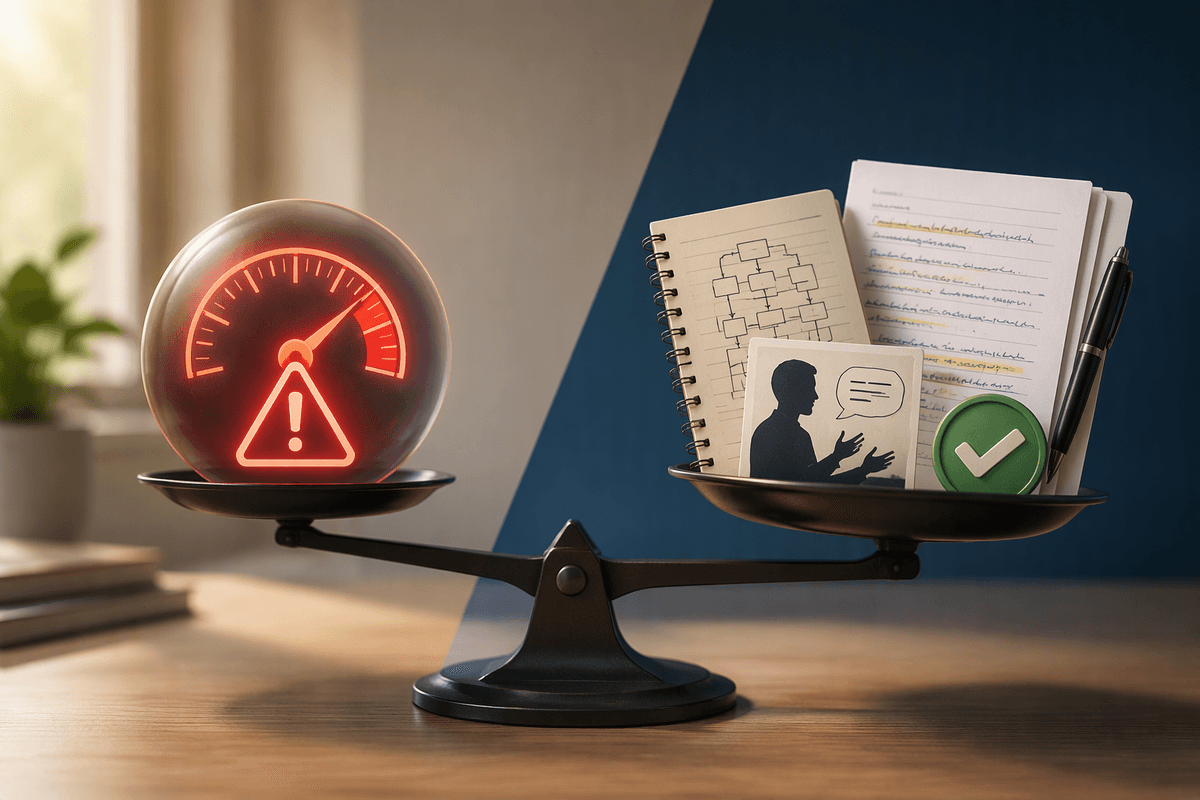
What kids seem to want most is clarity about what counts as help versus replacement, and a way to show their thinking without being treated like they cheated by default.
How to respond without panic: questions that open conversation
A parent usually notices AI use in a small way: a polished paragraph, a sudden jump in confidence, a kid whispering prompts on the couch. The best response is often curiosity, not a lecture. Ask, “What did you ask it to do, and what did you keep for yourself?” “Where do you think it could be wrong?” and “How would you check that without the bot?” Then bring in boundaries that match real risks: “What personal details did you share?” “Would you be okay if this chat got screenshot?” and “When does it start replacing practice?”