Why AI agents put middle management back in question
You can feel the pressure most in the “glue work” that used to require a person: chasing updates, translating goals into tasks, checking progress, compiling status, and nudging handoffs across teams. AI agents increasingly do those steps in the background—pulling data from tools, drafting plans, assigning work, and flagging risks—so the obvious question becomes: if coordination is cheaper and faster, what is a coordinator for?
The answer is not that managers disappear, but that the job stops being defined by information movement. When an agent can produce a plausible weekly report in minutes, the differentiator shifts to what the report means, what gets decided from it, and who owns the consequences. That forces organizations to re-litigate decision rights, escalation rules, and performance accountability—because automating the “how” exposes ambiguity in the “who” and “why,” and fixing that takes time, conflict, and real managerial judgment.
Which manager tasks are most “agent-ready” today
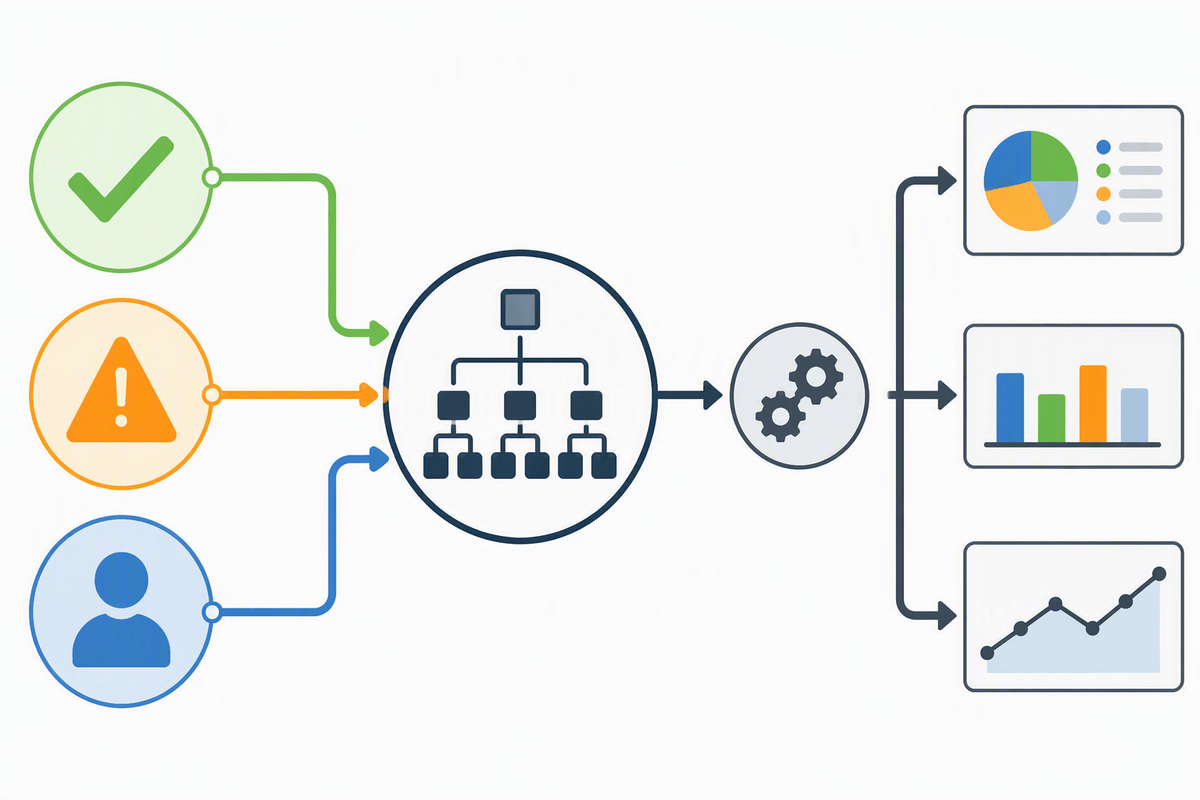
Think about the parts of your week that are repetitive but still high-stakes: the Monday status sweep, the “where are we?” pings, the sprint board cleanup, the weekly deck, the follow-up notes after a cross-team meeting. Those are increasingly agent-ready because they rely on pulling structured signals from systems of record and applying consistent rules—summarize changes since last check, compare plan vs. actual, identify blockers, propose owners, draft a message, schedule a review.
The most reliable wins today show up in reporting and coordination workflows with clear inputs and templates: collecting updates from Jira/Asana, turning Slack threads into action items, maintaining risk and dependency logs, drafting performance snapshots from agreed metrics, and checking process compliance (missing approvals, overdue reviews, incomplete documentation). The agent can only be as accurate as your data and definitions. If priorities change informally, work happens off-system, or teams use different taxonomies, automation will amplify confusion unless you standardize what “done,” “blocked,” and “owner” mean.
The hard parts agents struggle with: trust, judgment, politics
You’ve probably already seen the pattern: an agent can produce a clean summary, but people still argue about whether it’s “true.” That gap is trust—whether the underlying data is complete, whether the agent missed context from a side conversation, and whether it quietly encoded someone’s assumptions as if they were facts. In practice, teams spend real time auditing outputs, chasing sources, and re-litigating definitions. That time is a cost, and it can erase the speed gains if you don’t narrow the scope and set verification rules.
Judgment is harder. Managers routinely trade off speed vs. quality, short-term delivery vs. long-term maintainability, and fairness vs. urgency. Agents can propose options, but they don’t own the consequences when morale drops, a partner relationship frays, or a risk becomes political. Politics isn’t just conflict; it’s incentives and reputations. An agent can route a decision, but it can’t reliably tell you which escalation will be seen as a power move, or who needs to be consulted to avoid a future veto.
How decision rights and accountability may shift upward or downward
A familiar failure mode shows up when agents start assigning owners and deadlines: the work moves faster, but decision rights don’t. If an agent can “decide” which tickets get pulled into a sprint, leaders may push prioritization upward to a director or product owner so teams don’t treat an automated plan as policy. You’ll see this as tighter approval gates: fewer people allowed to change scope, more explicit criteria for what counts as an exception, and more formal escalation paths when data is ambiguous or cross-team trade-offs appear.
The opposite shift also happens. When routine coordination is automated and logged, executives can be more comfortable pushing decisions downward because the audit trail is clearer: what was recommended, what was chosen, by whom, and with what inputs. If an agent drafted the plan but a manager clicked “approve,” most organizations will still hold the human accountable. That means your leverage comes from redefining what you approve (principles, thresholds, budgets) and what the agent can execute without asking.
What a manager becomes when coordination gets automated

You see the shift the moment a bot can keep the project board clean and the status doc current: your value stops being “knowing the latest” and starts being “deciding what to do about it.” The manager role becomes closer to a system designer and referee—setting the rules the agent follows (definitions, thresholds, escalation triggers), reviewing exceptions, and making trade-offs visible when teams would otherwise optimize locally. Instead of chasing updates, you spend time shaping the operating cadence: what gets reviewed weekly vs. daily, which metrics actually indicate health, and when a risk is serious enough to interrupt planned work.
That sounds cleaner than it feels. The practical difficulty is that automated coordination makes ambiguity painful: someone has to own the taxonomy, keep tooling aligned across teams, and handle edge cases the agent can’t resolve. The influence shift comes from owning decision hygiene—clear “who decides,” documented rationale, and a predictable path for disagreement—so the organization can move faster without turning every exception into a meeting.
Practical adoption patterns: where agents help without chaos
A practical starting point is to pick one workflow where the cost of being slightly wrong is low but the coordination load is high: weekly status rollups, dependency tracking, meeting notes to actions, or “what changed since yesterday” digests. Teams get value when the agent’s job is to draft, not decide. The pattern that stays stable is “agent proposes, human verifies, system records”: the agent pulls from systems of record, produces a standard update, and links every claim to a source artifact so disputes become traceable instead of emotional.
Adoption usually breaks when agents cross the boundary into prioritization, performance interpretation, or cross-team commitments without explicit guardrails. Keep scope narrow at first: define a small set of triggers (overdue by X days, blocked by Y dependency, budget burn above Z) and a single escalation path when data is missing. Expect real setup cost: aligning fields across Jira/Asana, cleaning owner names, agreeing on what “blocked” means, and deciding who can override the agent. That work is what prevents speed from turning into churn.
How middle managers can prepare in the next 90 days
Look at last month’s calendar and pick two recurring “glue” loops you run (status rollups, dependency chasing, post-meeting action capture). Define what “done,” “blocked,” “owner,” and “exception” mean in writing, then instrument the workflow so every update is tied to a source artifact (ticket, doc, commit, approval). Run a four-week pilot where the agent drafts and you approve, with a simple error log: what was wrong, why it was wrong, and what field or rule would have prevented it.
At the same time, renegotiate decision rights explicitly: what the agent can execute, what requires your approval, and what escalates to your supervisor. Expect pushback and setup cost—data cleanup, taxonomy alignment, and time spent auditing outputs—and treat that as the price of moving from “relay” to “operating system owner.”