The new product-decision problem for small online sellers
You can design a solid product, post it on Etsy or Shopify, and still watch it disappear under a wave of near-identical listings, faster trend cycles, and platform algorithms you don’t control. What changed is the decision environment: product ideas are cheap, but attention is scarce. AI tools amplify that imbalance by generating endless variations, scraping competitor patterns, and surfacing “hot” keywords that many sellers act on at the same time.
The upside is obvious: faster research, clearer demand signals, and fewer blind bets. The downside is quieter: noisy data, false certainty, and a higher risk of building something that looks validated only because everyone else is rushing there too. For a solo seller with limited cash, print capacity, or storage, one wrong inventory bet can stall momentum for months.
Where AI actually helps: signals you can use today
You’re usually not short on ideas; you’re short on reliable signals. AI helps most when it reduces search friction and turns messy platform data into a few checkable inputs: what people are typing, what they’re actually buying, and what sellers are charging. Start with demand language. Use AI to cluster keyword variants (e.g., “teacher gift,” “end of year teacher,” “teacher appreciation”) and to flag modifiers that indicate intent like size, material, or occasion. Then pressure-test competition. Ask the tool to summarize the top listings’ common promises, photo styles, and shipping timelines so you can see what’s table stakes versus what’s differentiated.
Finally, use AI as a margin sanity check. Feed it your real costs—materials, fees, shipping, returns, your time—and have it model a few price points against typical marketplace ranges. These tools mostly read what’s visible on listings, not your conversion rate or repeat buyers, so treat outputs as starting hypotheses, not conclusions.
Turning vague ideas into testable product bets
The difference between an idea and a real product bet comes down to the details that determine whether anyone will buy it. “Minimalist cat mug” is a concept. “12oz minimalist cat mug, dishwasher-safe, gift-ready box, under $28 shipped, targeting ‘cat mom gift’ searches, with a two-photo listing that shows scale and packaging” is specific enough to test. AI works well as a forcing function here: turn the concept into a one-sentence customer promise, three measurable requirements covering price, production time, and shipping, plus two reasons a buyer would choose the product over the top three competing listings.
From there, build a small test that fits the budget. Keyword-driven listing titles, a concise photo brief, and a break-even calculation provide enough material to judge the idea before committing more money. Real-world constraints still have the final say. Supplier lead times, rush fees, minimum order quantities, and shipping costs may undermine an otherwise attractive margin, so those limits belong in the initial brief rather than being checked after the plan is already built.
Avoiding the copycat trap and saturated-market mirages
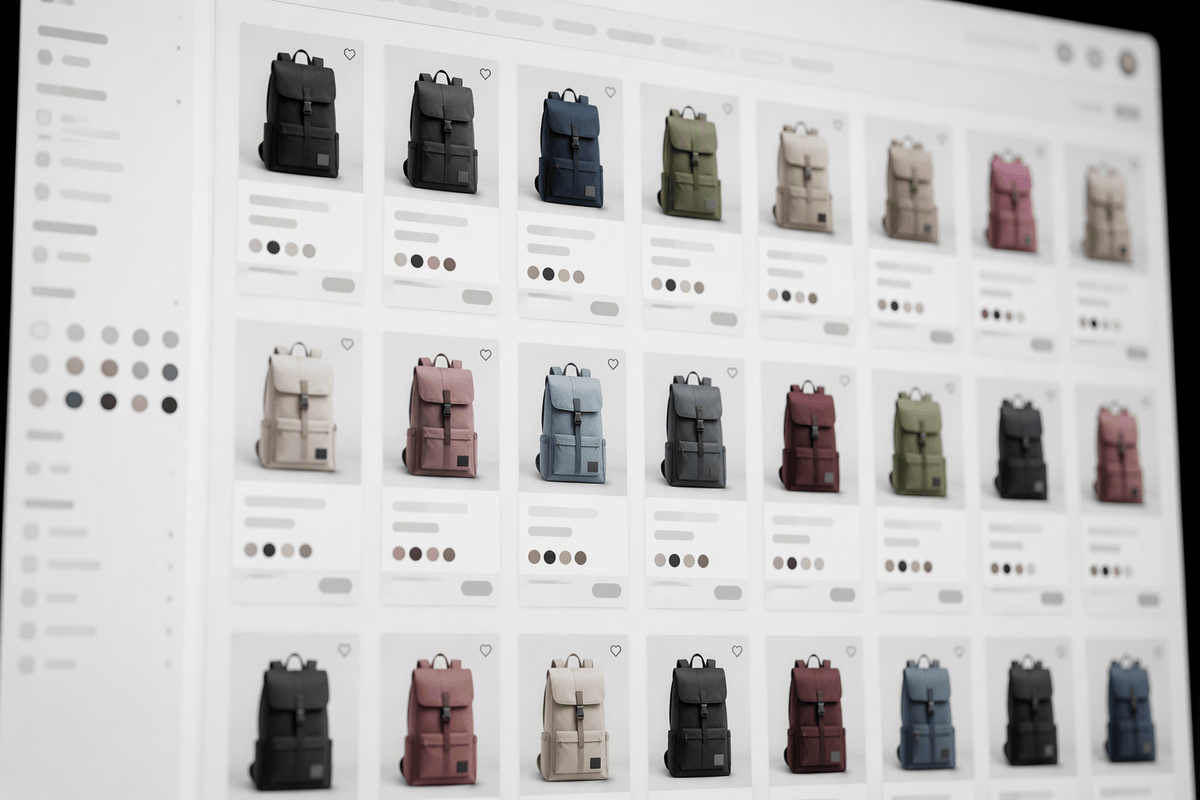
You’ve seen the pattern: an AI tool shows a “winning” product, you search it, and the first page is already filled with lookalikes. That’s the copycat trap. Most AI recommendations are trained on what’s already visible and already selling, so they naturally pull you toward crowded baselines. A quick filter is to ask, “What would I change that the model can’t easily copy?” If the only difference is color, font, or a slightly new phrase, you’re competing on ad spend, review count, and production speed—areas where small sellers usually have the least slack.
Saturated-market mirages happen when demand signals are real, but the profit opportunity isn’t. High search volume can hide brutal price compression, expensive returns, or listings that win because of bundle economics (multi-packs, upsells) you can’t match. Use AI to map the “minimum viable offer” in the category—shipping promise, packaging, photo quality, personalization options—and then price your own version with your actual costs. If you can’t hit the category’s table stakes without erasing margin or adding fulfillment risk, treat the trend as research, not a roadmap.
Quick validation loops that don’t require big inventory
Learning whether a product bet has potential does not require 200 units sitting on a shelf. A faster approach is to measure buyer intent before committing to inventory. Start with a listing-first test: publish a draft listing, or use a hidden Shopify product page, with the actual price, realistic shipping times, and photos that show scale. Create two positioning variants with AI, changing the primary keyword, first-photo caption, and core promise, then send a small, capped amount of traffic through ads or a short social post. Keep the measurement simple: click-through rate, add-to-cart rate, saves or favorites, and preorders or “notify me” signups.
Physical products benefit from a similarly small commitment. A micro-batch or made-to-order window of 10–20 units provides a manageable way to test real demand without tying up much inventory. When fulfillment is the main constraint, the offer itself may be enough to test interest. Sample swatches, digital proofs, or personalization mockups can show whether buyers respond to the style or concept rather than merely the product category. Clean testing still takes time, especially when tracking needs to be set up properly, so keep the cycle short and stop once the results clearly fall below the break-even threshold.
When to trust the model—and when to trust your gut

You’ll notice the model feels most “confident” right where you should be most skeptical: broad, popular keywords and products with lots of public data. Trust it for mechanical work—grouping search terms, spotting repeated claims in top listings, estimating fee impact, and flagging obvious margin problems—because those are pattern tasks. Start doubting it when it recommends something that would require you to change your lead times, quality bar, or customer type just to match the category’s norms. If the plan only works if you undercut price, ship faster than you can, or accept higher return risk, the data is describing a market reality, not a fit for your business.
Your gut earns a vote when it’s grounded in lived constraints: what you can reliably make, what customers praise you for, what you can photograph well, what you can support after purchase. A simple rule is to let the model choose the “where” (which searches and angles look promising) while you choose the “what” (the specific offer you can deliver without breaking operations). Saying no to a data-backed trend can feel like leaving money on the table, but saying yes to a bad-fit product usually costs more.
A practical workflow for choosing what to make next
On a normal week, you’re choosing between three paths: double down on what already sells, chase a “rising” niche, or launch something adjacent that strengthens your brand. Start by writing 5–10 candidate bets in the same format (promise, price ceiling, production time, shipping constraint). Use AI to score them on three checks you can verify: keyword intent strength, competitive table stakes, and margin at your real costs. Then pick one bet to run a two-variant listing test with a hard stop rule (e.g., if saves or add-to-carts don’t hit your break-even benchmark, kill it). Only after the test passes do you commit to a micro-batch and a repeatable fulfillment plan.