Why AI risk debates feel loud but not clear
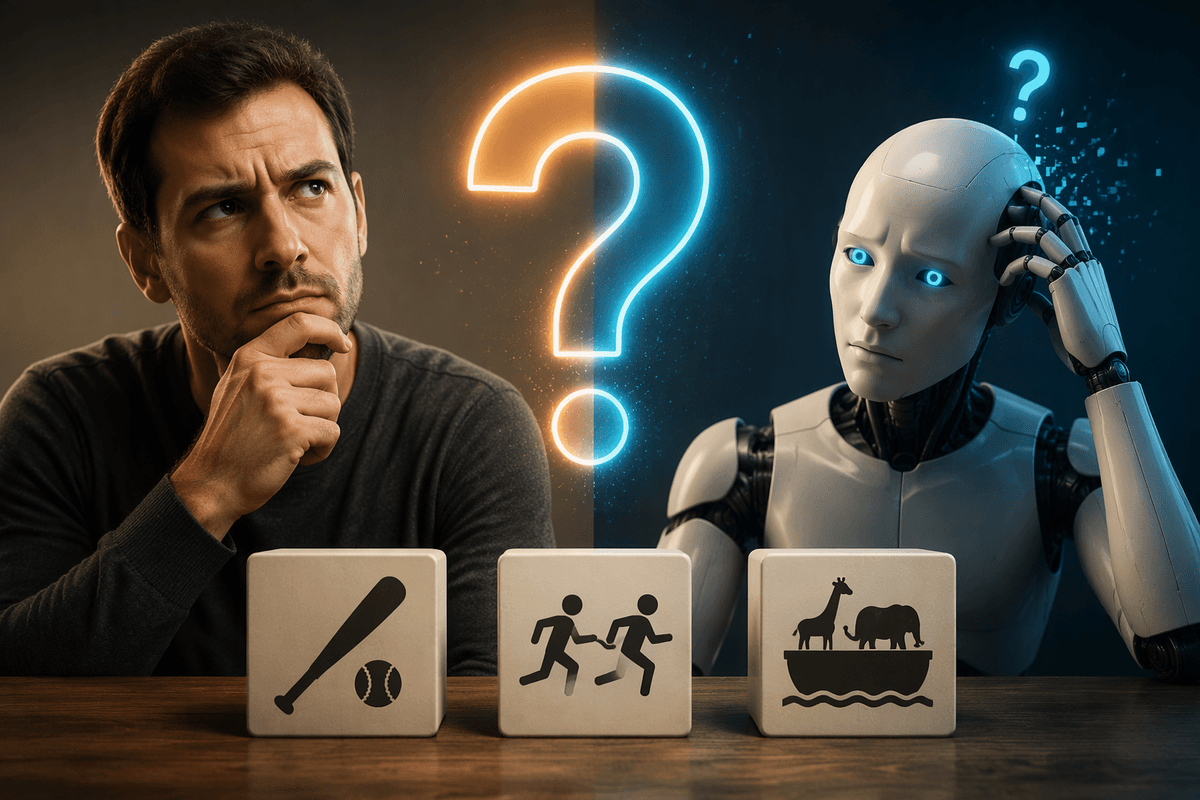
You’ve probably seen the pattern: one headline says AI is about to wipe out jobs and destabilize society, another insists it’s just autocomplete with good marketing, and both sound confident. The debate gets loud because the claims are huge, the timelines are vague, and the terms are slippery—“intelligence,” “alignment,” “danger,” and even “AI” can mean very different things depending on who’s talking.
Clarity also gets buried because the strongest arguments often mix three layers: what today’s systems can already do (like generate convincing text), what might happen if capabilities scale, and what policies should follow. Those layers need different kinds of evidence, but they’re frequently argued in the same breath. Add incentives—research funding, product launches, political urgency, and media attention—and you get a conversation optimized for urgency rather than precision.
Start by pinning down the claim you’re evaluating
Picture a discussion where someone warns that “AI will disrupt public trust.” That could mean deepfakes spreading false information during a major public event, automated persuasion making people easier to influence over time, or cheap synthetic content overwhelming information channels until reliable sources become harder to distinguish. These are separate claims, with different time horizons and different standards of evidence, yet they are often presented as though they describe the same problem.
Before judging the argument, put it into a testable form: what system is involved, what action does it take, who is affected, at what scale, by when, and through what mechanism? Separate “could” from “will,” and distinguish problems already being observed from risks that depend on future advances in model capability. The distinction may seem overly precise, but it helps prevent a common bait-and-switch: using concrete problems happening today to support sweeping predictions about the future, or dismissing genuine harms simply because the most extreme scenario remains speculative.
What counts as evidence in AI risk—really?
You can watch people argue past each other because they’re using different standards of proof. For near-term harms, evidence can look like incident reports, red-team results, fraud statistics, model evaluation data, and independent replication: did a specific system reliably enable a real misuse, under realistic constraints, at a measurable rate? For longer-horizon risks, you rarely get direct “smoking gun” data, so the evidence shifts to tighter reasoning: a clearly described causal chain, sensitivity to assumptions, and comparisons to similar technologies where incentives and failure modes rhyme.
A useful habit is to separate three buckets: observed behavior (what the system demonstrably does), demonstrated impact (what happened in the world because of it, not merely alongside it), and projected risk (what could follow if scale, access, or autonomy changes). Each bucket can be legitimate, but they should not be swapped mid-argument. And even “good” evidence has costs: realistic testing is expensive, access to frontier models is limited, and many failures are underreported because they’re embarrassing or legally risky.
Separate scary stories from plausible causal pathways

A scary story usually has a crisp villain and a fuzzy mechanism: “A rogue AI escapes,” “an autonomous system takes over,” “models manipulate everyone.” A plausible causal pathway is less cinematic and more boringly specific. It spells out the steps that must happen in order, who has the capability at each step, and what constraints get in the way: access to the model, required tools, time, money, operational security, and the chance of being caught.
Take “AI will enable bioterrorism.” The pathway might be: a user gets reliable synthesis advice, sources materials, avoids obvious flags, runs experiments successfully, and then deploys without being stopped. Each link is testable: do models give novel, correct guidance under realistic guardrails; can novices execute it; do existing supply-chain controls break? Strong arguments don’t just assert the chain—they show where today’s evidence sits, and which missing links would be expensive or dangerous to validate in the real world.
Spot weak reasoning: cherry-picks, analogies, and moving goals
You’ve likely seen a single vivid example treated as if it settles the whole question: one jailbreak becomes “AI is uncontrollable,” one safe demo becomes “the risk is overblown.” A quick check is to ask what the full distribution looks like: how often does the failure happen, under what setup, and compared to what baseline? Cherry-picks hide the denominator. If the claim depends on “this happened once,” you want rates, ranges, and replications, not just screenshots.
Analogies can be useful, but they’re also a shortcut for missing mechanisms. “This is like nukes” or “this is like the internet” only helps if the matching parts are spelled out: who has access, what the bottlenecks are, how quickly harms scale, and what enforcement looks like. Watch for moving goals, too: when a prediction fails on timeline or severity, it’s quietly replaced by a vaguer claim that can’t be falsified. That shift should lower your confidence, not raise it.
When data is thin, use uncertainty and base rates well

Most AI risk questions arrive before the clean data does. A model is released, a few incidents surface, and people try to jump straight to “this will be huge” or “this is nothing.” When evidence is sparse, treat your judgment as a range, not a verdict: what would you believe if the true rate of harm were 1 in 10,000 uses versus 1 in 100? What additional facts would actually move you between those ranges, and how likely are you to get them soon given limited access, expensive testing, and underreporting?
Base rates keep you honest. Ask how often similar failures happen in comparable settings: fraud tools, phishing kits, automated ad targeting, insecure software dependencies. If the claim is “AI will cause a major incident this year,” you need to know how many serious attempts typically occur, what share succeed without AI, and whether AI changes the bottleneck (skills, cost, speed, scale). When the base rate is already high, even a modest uplift matters; when it’s low, extraordinary confidence needs extraordinary support.
A practical checklist for judging AI risk claims fast
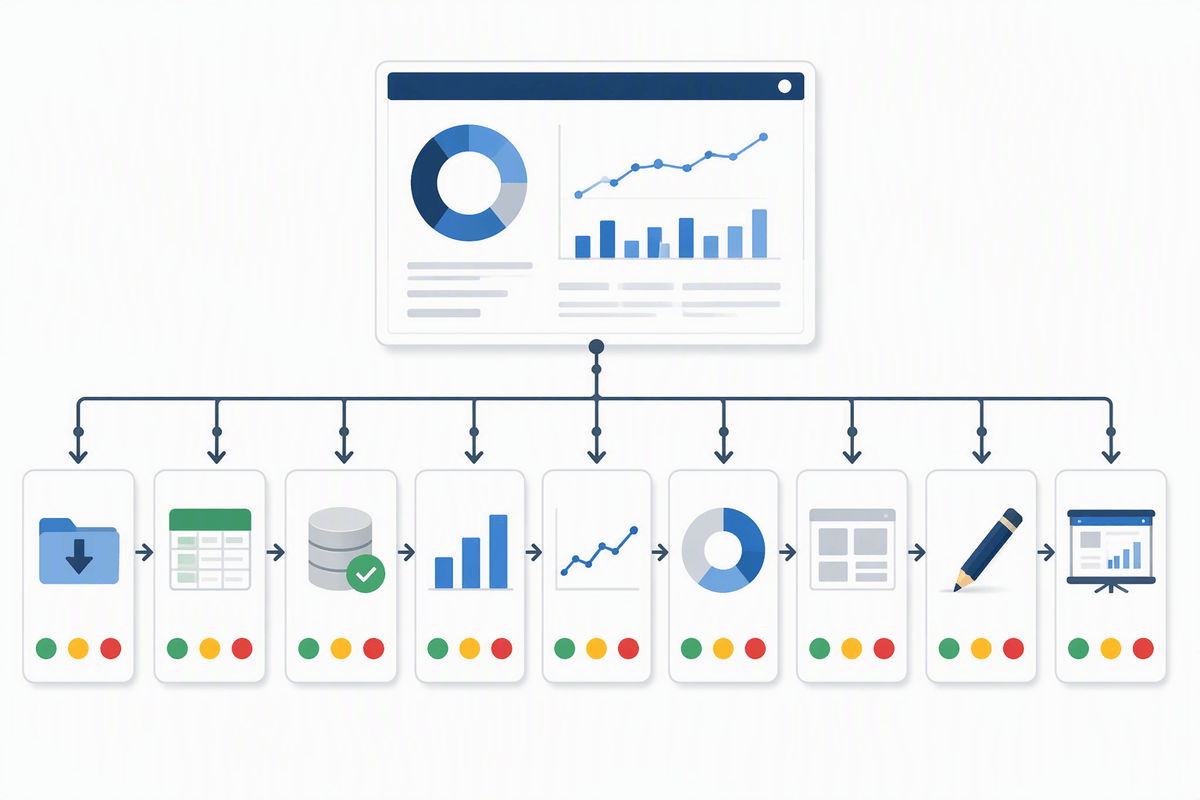
When you hear a strong AI risk claim, run a quick checklist: What exactly is the system, the action, the target, the scale, and the timeline? What is observed behavior versus demonstrated real-world impact versus projection? What’s the causal chain, and which link is currently the bottleneck (access, money, skill, time, tooling, detection)? What would disconfirm the claim, and is the claim being kept falsifiable?
Then ask for denominators: rates, ranges, replications, and comparisons to a baseline. Check incentives and selection effects (who benefits from urgency, who reports failures). Finally, choose an action that matches uncertainty: low-regret mitigations first, because rigorous evaluation, audits, and realistic red-teaming are slow and expensive.