Autonomous AI is here—why oversight can’t lag behind
A familiar pattern is playing out in teams adopting AI “agents”: the first pilots feel like productivity wins, then someone realizes the system can move money, change customer-facing text, open tickets, or trigger outreach with very little friction. The operational risk comes less from the model “being wrong” in a chat window and more from small errors turning into real-world actions at machine speed. Once autonomous steps are woven into daily workflows, rollback is expensive—customers notice, regulators ask questions, and internal teams spend hours reconstructing what happened.
Oversight can’t be bolted on after the fact because autonomy changes the default. Decisions that used to require a person to notice, approve, and document now happen silently unless you design for visibility and control. You cannot review everything; scaling means choosing where humans must approve, where guardrails should block, and where monitoring and audits are enough to keep accountability intact.
What changes when AI can act, not just advise
Picture the difference between an assistant who drafts an email and a system that sends it, follows up, and updates the CRM. The risk profile changes because the “output” is no longer a suggestion—it is an operation. That shift collapses the time you normally have to notice mistakes, apply judgment, and create a paper trail. It also broadens impact: one flawed step can propagate through integrated tools, touching customers, finances, inventory, or access controls in minutes.
Autonomy also blurs responsibility unless you make it explicit. When an agent chains actions across systems, who owns the decision—the product team, the operator who enabled permissions, or the business unit that benefits? The practical trade-off is speed versus reversibility: the more you optimize for hands-off execution, the more you must invest in permissions design, safe defaults, and “stop the line” mechanisms that let humans intervene before a small error becomes a public incident.
Where oversight fails in real workflows and organizations
In most organizations, oversight fails in the gaps between tools, teams, and “assumed” controls. An agent might be monitored in the AI product dashboard, while the actual consequences land in Salesforce, Zendesk, a billing system, or a shared inbox where no one is watching for automated patterns. When something goes wrong, teams discover they have activity logs but not decision logs: they can see what changed, but not why it changed, what inputs were used, or who approved the agent’s permissions.
Failures also come from mismatched incentives and unclear ownership. Ops wants throughput, compliance wants defensibility, security wants least privilege, and product wants fewer prompts and approvals. If no single role is accountable for the end-to-end workflow, “human-in-the-loop” becomes a checkbox that degrades into rubber-stamping. The real oversight requires time to define escalation paths, maintain access boundaries, and rehearse incident response, even when the system appears to be working.
Map your risk by the actions AI can take
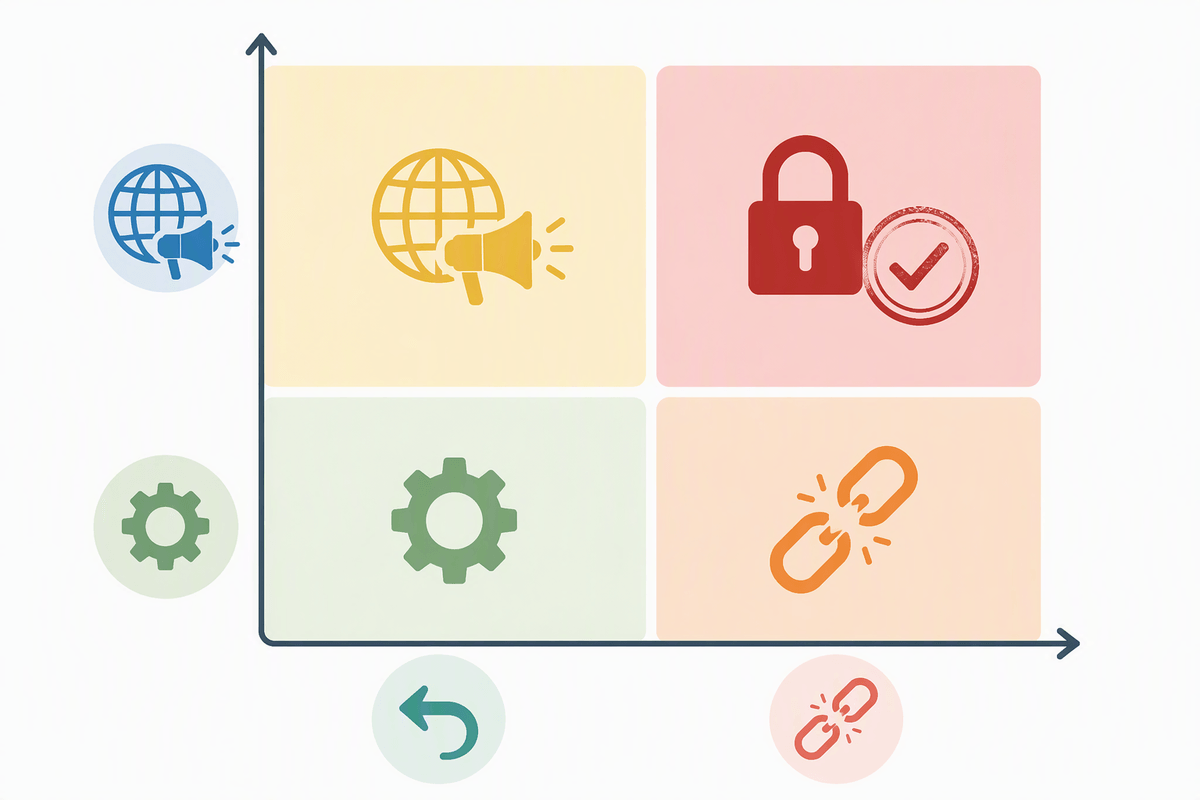
Most teams start risk mapping by debating model accuracy. A more useful starting point is a simple inventory of what the agent can actually do: read data, write data, send messages, change customer-facing content, create or close tickets, initiate refunds, provision access, or trigger downstream automations. Each permission expands the blast radius and shrinks the time you have to catch mistakes. “Can draft” is usually low risk; “can publish” is different; “can publish and then segment-and-send to 200,000 customers” is in another category entirely.
Group actions by two dimensions that operators recognize: reversibility and external impact. If you can undo the change quickly (e.g., reopen a ticket, revert a config), you can rely more on monitoring and sampled review. If the action is hard to reverse (wire transfers, access grants, regulatory communications, public posts), require tighter controls: step-up approvals, narrower scopes, and limits on volume or velocity. The cost is that this adds friction, but it also prevents the expensive kind of incident you can’t quietly roll back.
Oversight patterns that scale beyond constant human review
In day-to-day operations, the scalable move is to treat oversight as a workflow design problem, not a staffing problem. Start with “policy before autonomy”: encode what the agent is allowed to do (and not do) as permissions, scopes, and thresholds, then make the agent prove it is inside those bounds. Common patterns include step-up approval only when an action crosses a dollar amount, touches regulated data, affects many customers, or departs from normal behavior; everything else can run automatically. Pair that with rate limits and circuit breakers that pause execution when volume, error rates, or customer complaints spike, so the system fails safe rather than “powering through.”
Another pattern that scales is separating “who decides” from “who executes.” Let the agent assemble options, cite inputs, and propose an action plan, while a deterministic rule layer enforces hard constraints (required fields, allowed destinations, approved templates, two-person control for sensitive actions). For high-risk domains, use staged rollout: start with shadow mode, then small cohorts, then broader access, and keep a fast rollback path. The practical cost is upfront work—permission modeling, integration changes, and exception handling—but it is cheaper than hiring reviewers for every action and still missing the rare, high-impact failure.
Make oversight measurable: logs, audits, and accountability
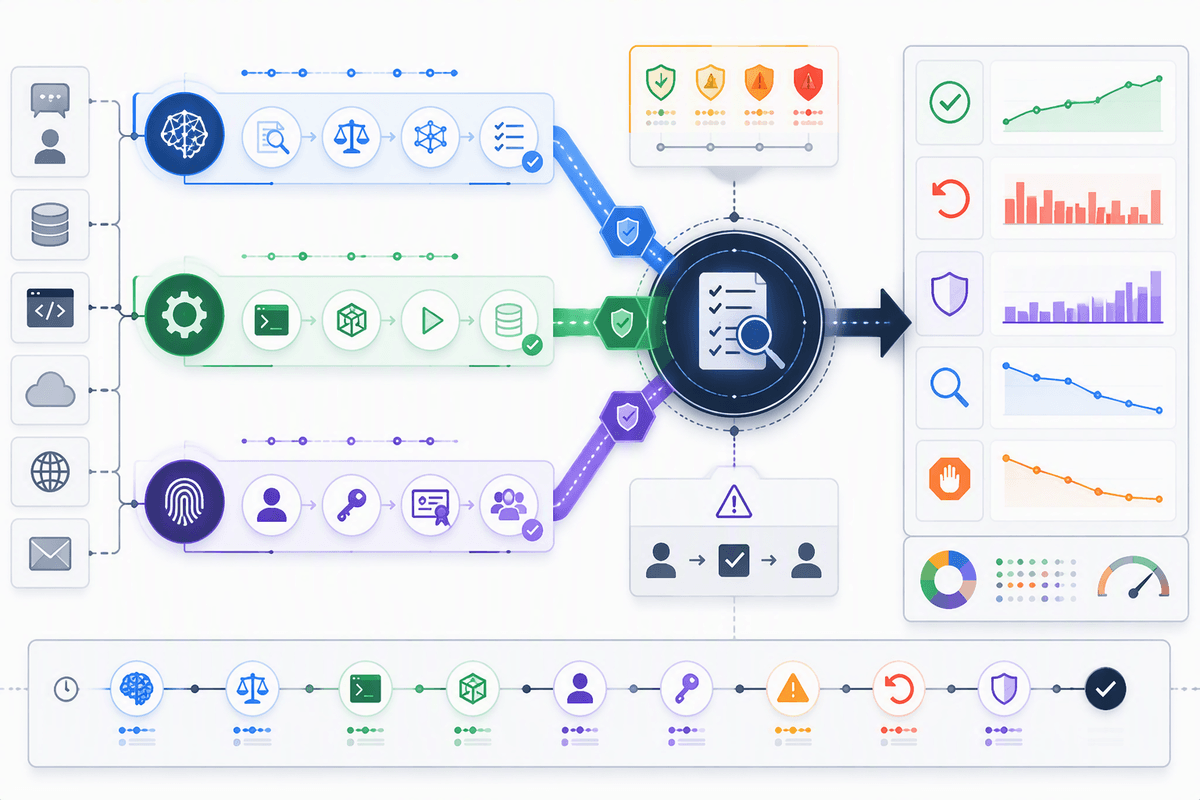
You notice the difference the first time someone asks, “Why did the agent do that?” and the only answer is a screenshot. Measurable oversight starts with logging that matches how autonomous work actually happens: a decision trail (inputs, retrieval results, policy checks, thresholds hit), an action trail (what API calls were made, to which systems, with what parameters), and an identity trail (which service account, which human owner, which approval—if any). Without all three, you can detect outcomes but can’t defend decisions.
Audits should be routine, not a post-incident scramble. Sample actions by risk tier, review exceptions and overrides, and track a small set of indicators: percent of actions requiring step-up approval, rollback frequency, policy-block rates, and time-to-detect/time-to-stop when things drift. Accountability only works when it’s named: one role owns permissions and thresholds, one owns monitoring and on-call response, and escalation paths are written down and rehearsed. The cost is ongoing ops work, but it’s the price of scaling autonomy without losing control.
A practical rollout checklist for more autonomous AI
Before you scale, walk the workflow end to end: list every tool the agent can touch, the exact actions it can take, and what “done” looks like for each step. Set least-privilege permissions and hard limits (dollars, recipients, volume, time windows), and decide where step-up approval is mandatory versus where monitoring is enough. Name one owner for permissions/thresholds and one for monitoring/on-call, with a written “stop the line” trigger.
Run in shadow or low-volume cohorts first, and measure block rates, override rates, rollback frequency, and time-to-detect/time-to-stop. Budget for the unglamorous work—exception handling, log storage, and periodic access reviews—because that’s where most teams learn whether autonomy is actually controllable.